Beyond conventional AE
Not limited to event detection and reporting alone. FRAEMS is designed to interpret the structural meaning of evolving acoustic behaviour.
Predictive structural intelligence for critical assets
The scope of FRAEMS is to detect aging, fatigue and possible crashes of solid structures. It is an advanced evolution of conventional acoustic-emission monitoring. Rather than limiting itself to detecting stress-generated acoustic events, it is intended to interpret how structural damage evolves over time through dual-band passive listening, fractal box-counting logic, pattern evaluation and improved sensor sensitivity.
From dispersed micro-crystalline failures to critical cracks in the structure: a method conceived to support predictive, rather than merely preventive, maintenance logic.
Not limited to event detection and reporting alone. FRAEMS is designed to interpret the structural meaning of evolving acoustic behaviour.
Its objective is to support earlier insight into fracture evolution, helping move from fixed scheduling toward more informed condition-based evaluation.
The value lies in the algorithm embedded in the electronics, designed to transform complex acoustic behaviour into a simple comparable output.
Why FRAEMS is different
Conventional acoustic-emission systems are highly useful for detecting and classifying stress-generated acoustic events. FRAEMS is designed to go further: not merely to register that something has happened, but to indicate when a monitored element is moving from dispersed micro-crystalline failures toward critical cracks in the structure.
Its intended value is not damage localization within the element. It is an early interpretive warning that the element is evolving toward fracture, supporting predictive evaluation rather than preventive logic alone.
Detection, classification and monitoring of acoustic events generated by stressed materials and structures.
Interpretation of damage evolution through dual-band listening and box-counting logic.
Earlier indication that a monitored element is approaching a critical condition, with practical value for maintenance prioritisation and technical decision support.
How the method is framed
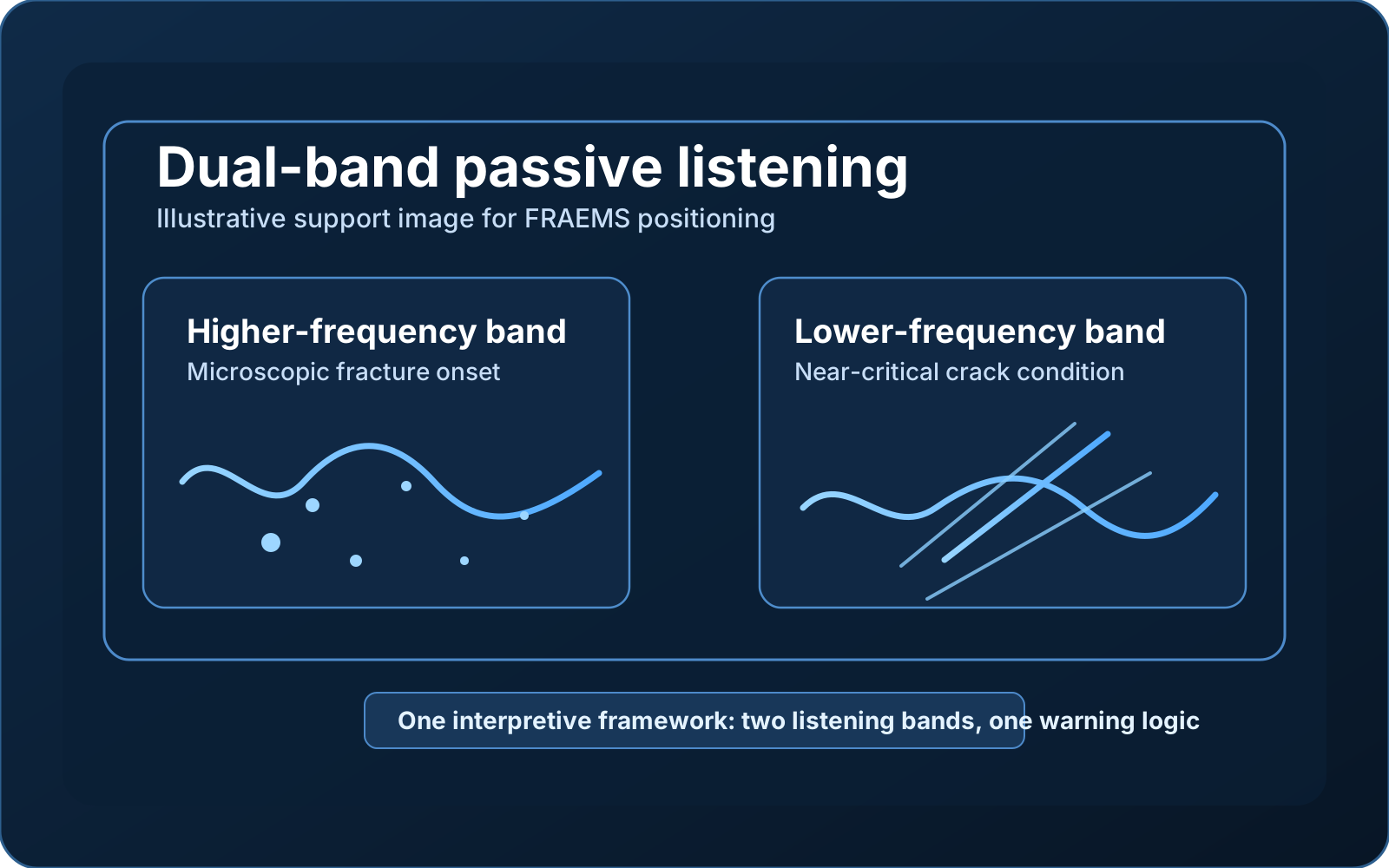
FRAEMS is based on a passive listening method using two distinct sensing bands. A higher-frequency channel is intended to capture the onset of microscopic fracture activity, while a lower-frequency channel is used to follow the acoustic behaviour associated with the approach to critical crack conditions.
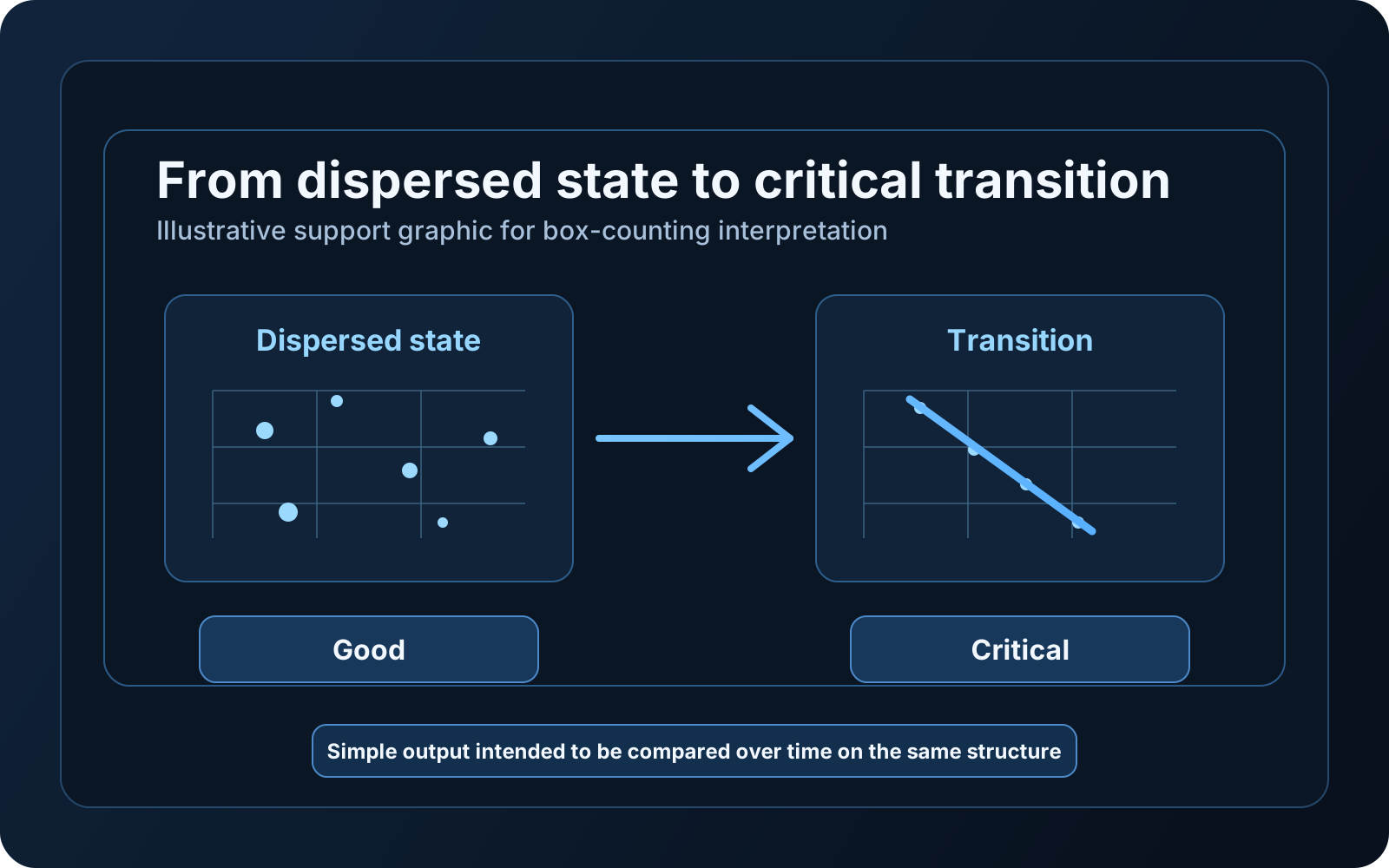
The result is presented just as a simple number, easily comparable with previous numbers coming out from FRAEMS used in the same structure: it shows how the structure has aged after yesterday's stress.
Interpretive logic
FRAEMS applies fractal box-counting logic to assess how damage behaviour changes within the structure. The conceptual objective is to read the transition from a more dispersed and chaotic state, associated with healthy or early-stage micro-damage behaviour, toward a more ordered crack condition as the material approaches a critical state.
The intelligence of FRAEMS is embedded in the algorithm within the electronics. Its role is to transform complex acoustic behaviour into a simple output that can be compared with previous FRAEMS values recorded on the same structure.
Box-counting logic is used to evaluate how fracture-related patterns evolve and organize over time.
The analytical value comes from the algorithm embedded in the electronics, not from a generic AI layer.
The aim is to support earlier understanding of structural change, not simply to document damage after it has become obvious.
Practical direction
FRAEMS is presented as a modernized development path in predictive structural listening, extending earlier practical concepts through improved sensor sensitivity, a more advanced interpretive architecture and stronger embedded electronics.
Validation posture
Earlier field applications in structural, heritage and geotechnical contexts have shown strong predictive potential, with reported reliability in selected cases above 90 percent. Detailed technical evidence and pilot logic are shared only through qualified and confidential discussions.
Application areas
FRAEMS is not positioned as a generic tool for every scenario. Its relevance depends on the asset class, the consequence of failure and the validation pathway required by each sector.
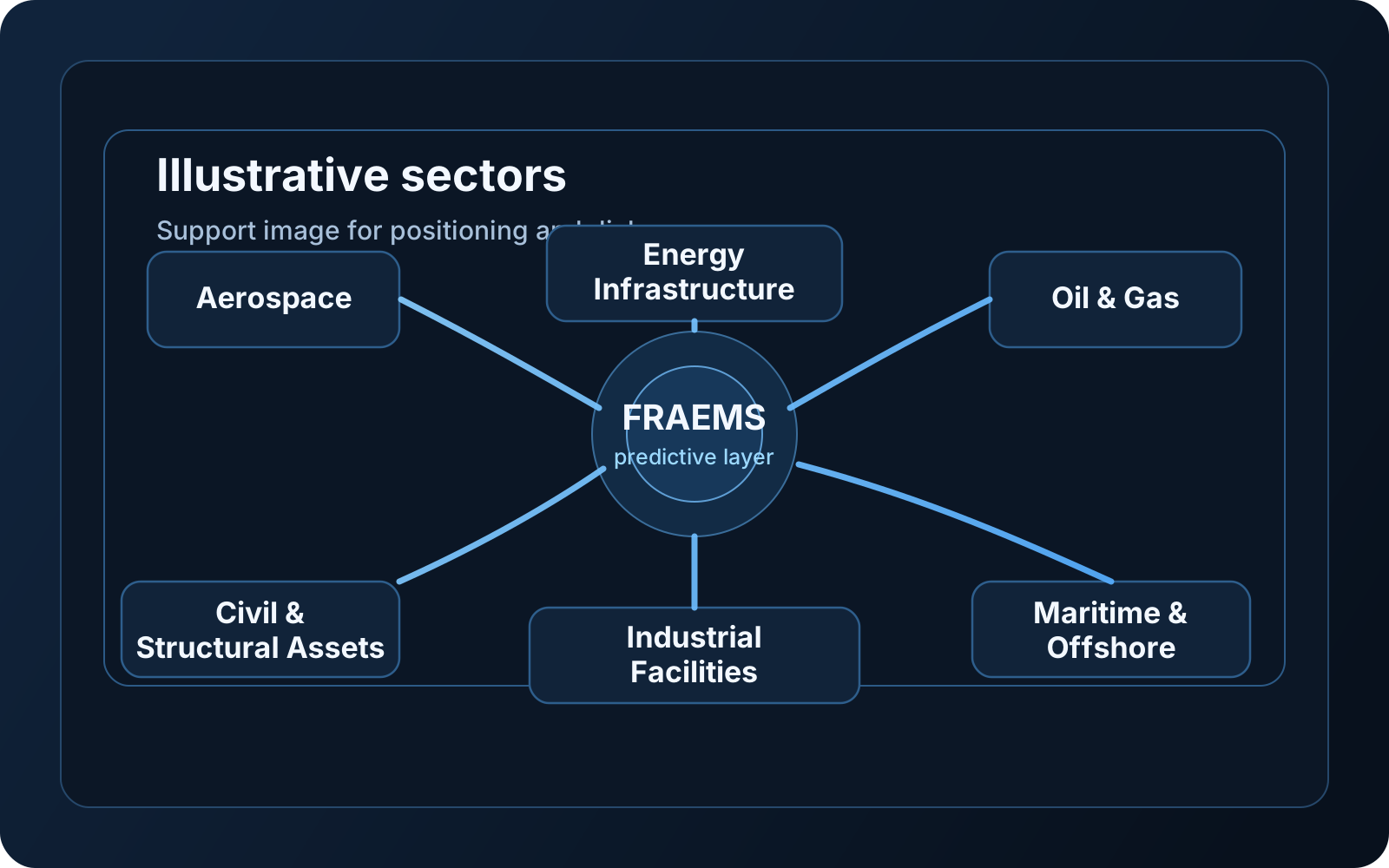
Aero-Structures, assemblies and critical components where earlier understanding of fatigue/aging evolution supports advanced validation and assessment activity. After the certification of FRAEMS, many unnecessary disassembly and reassembly will be avoided.
Pipelines, tanks, pressure systems and strategic infrastructure where predictive structural insight has direct operational and economic relevance.
Plants, storage systems and high-duty assets requiring improved interpretation of anomaly evolution and maintenance priority.
Production environments where fatigue, material stress and critical failure pathways can affect continuity, safety and capital efficiency.
Selected bridges, structural elements and sensitive built-environment cases where predictive understanding may support future inspection logic.
Marine and offshore structures exposed to dynamic load, harsh conditions and high consequence-of-failure scenarios.
Why this matters commercially
Support for recognizing meaningful structural changes before they become operationally critical.
Potential to move from fixed timing toward more condition-informed intervention logic.
A simple numeric output may strengthen technical dialogue by making yesterday's stress visible against previous FRAEMS readings on the same structure.
Confidential contact
FRAEMS is presented through qualified and selective dialogue. Detailed technical materials, pilot logic and sector-specific discussion are shared progressively after an initial review.
Qualified enquiries may receive a confidential executive brief after initial review.